

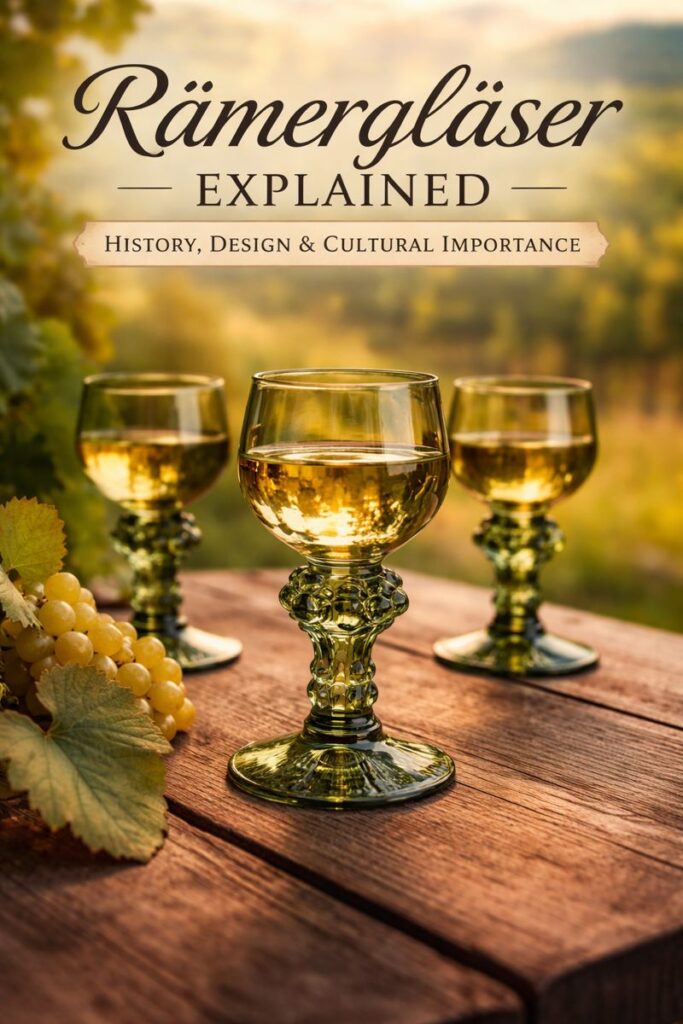
Rämergläser, known in English as Roemer glasses, are one of the most iconic types of traditional European wine glasses. Originating in German-speaking regions, these distinctive glasses are especially associated with white wine, particularly Riesling. Their elegant shape, green-tinted glass, and decorative stem make them instantly recognizable and deeply rooted in European wine culture. Even today, Rämergläser are admired not only for their beauty but also for their historical and functional value.
In this article, we will explore the origins, design features, cultural significance, and modern use of Rämergläser. We will also look at how they compare to modern wine glasses and why they continue to attract collectors and wine lovers around the world.
What Are Rämergläser?
Rämergläser are traditional stemmed wine glasses that originated in Central Europe, particularly in Germany, Austria, and Switzerland. The name “Römer” (sometimes spelled Rämer in older or regional usage) is believed to come from medieval Latin or from early European naming traditions, rather than from the ancient Romans themselves.
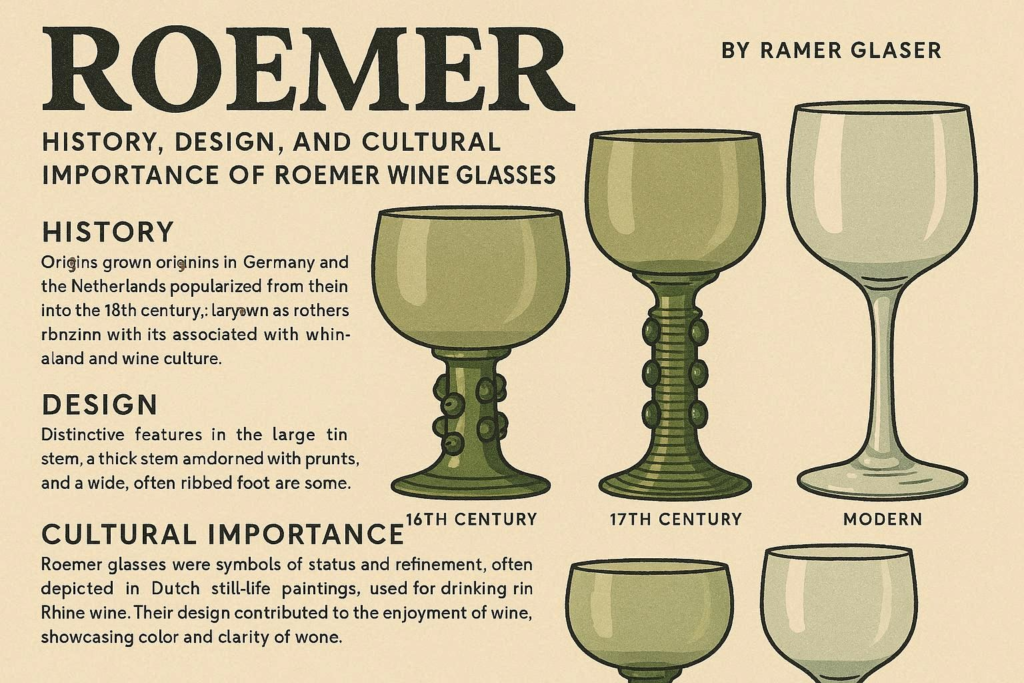
These glasses were most commonly used from the 16th to the 19th century, although their design still influences modern glassware. Rämergläser are especially known for their green or light olive-colored glass, thick stem, and decorative prunts (small raised glass knobs) on the stem that help prevent slipping.
Historical Origins of Rämergläser
The history of Rämergläser is closely connected to the development of glassmaking in the Rhine and Moselle regions. During the late Middle Ages and the Renaissance period, these regions became important centers for forest glass production. Glassmakers used wood ash as a raw material, which naturally gave the glass a greenish tint.
Rämergläser became popular among both nobles and common citizens because they were sturdy, reusable, and visually appealing. Wine was safer to drink than water in many areas, so wine glasses played an important role in everyday life as well as celebrations.
Over time, Rämergläser became associated with wine taverns, festivals, and family gatherings, especially in wine-growing regions of Germany.
Design Features of Rämergläser
One of the main reasons Rämergläser are still admired today is their unique and practical design. Every part of the glass serves a purpose, combining beauty with function.
Key Design Elements
- Bowl: Usually rounded or slightly conical, designed for white wines
- Stem: Short and thick, often decorated with prunts
- Foot: Wide and stable for balance
- Glass Color: Typically green due to natural minerals in early glassmaking
The prunts on the stem were especially useful in lively wine halls, where hands might be wet or greasy. They also added a decorative touch, making each glass slightly unique.
Main Characteristics of Rämergläser
| Feature | Description |
|---|---|
| Origin | Germany, Austria, Switzerland |
| Typical Color | Green or olive green |
| Main Use | White wine (especially Riesling) |
| Time Period | 16th–19th century |
| Decorative Element | Prunts on the stem |
Cultural Importance in Wine Regions
Rämergläser are more than just drinking vessels; they are a symbol of wine culture in German-speaking Europe. In regions such as the Mosel, Rheingau, and Rhine Valley, these glasses are closely tied to local traditions and festivals.
During wine festivals, you may still see Rämer-style glasses used as decorative items or souvenirs. They represent hospitality, celebration, and regional pride. In some families, antique Rämergläser are passed down through generations as cherished heirlooms.
The glass has also appeared in paintings, literature, and folklore, often symbolizing joy, abundance, and togetherness.
Rämergläser vs. Modern Wine Glasses
While modern wine glasses are designed with advanced knowledge of aroma and taste concentration, Rämergläser offer a more traditional experience. They may not enhance aromas as precisely as modern crystal glasses, but they provide a strong connection to history and tradition.
Rämergläser vs. Modern Wine Glasses
| Aspect | Rämergläser | Modern Wine Glasses |
|---|---|---|
| Material | Traditional glass | Crystal or lead-free crystal |
| Shape | Rounded, sturdy | Tall, thin, aroma-focused |
| Color | Green-tinted | Clear |
| Historical Value | Very high | Low to moderate |
| Use Today | Decorative, traditional | Everyday wine tasting |
Collecting Antique Rämergläser
Antique Rämergläser are highly valued by collectors, especially those in good condition with clear prunts and original glass color. The value of an antique Rämer depends on factors such as age, craftsmanship, condition, and origin.
Collectors often look for:
- Hand-blown glass signs
- Uneven prunts (a sign of authenticity)
- Natural color variations
Museums across Europe display Rämergläser as examples of early glassmaking skill and cultural history.
Modern Interpretations of Rämergläser
Today, many glass manufacturers produce modern versions of Rämergläser. These are inspired by traditional designs but made with modern techniques. Some are clearer, lighter, and more refined, while still keeping the classic shape and decorative stem.
Modern Rämer-style glasses are often used:
- In themed restaurants
- At wine tastings and festivals
- As decorative home items
They are especially popular among people who enjoy traditional European aesthetics.
How to Use Rämergläser Today
Although originally designed for white wine, Rämergläser can be used in many creative ways today. Some people use them for:
- White wine or light rosé
- Sparkling wine
- Decorative candle holders
- Display pieces in cabinets
Their sturdy construction makes them practical as well as decorative.
Care and Maintenance
If you own antique or modern Rämergläser, proper care is important. Hand washing is strongly recommended, especially for older pieces. Avoid sudden temperature changes, as traditional glass can be sensitive to heat.
Store them upright in a safe place, preferably away from direct sunlight, to preserve their color and integrity.
Conclusion
Rämergläser are a beautiful blend of history, craftsmanship, and cultural identity. While modern wine glasses may dominate today’s dining tables, Rämergläser continue to hold a special place in European tradition and among collectors worldwide. Their green glow, decorative stems, and timeless design tell a story of centuries-old wine culture that still resonates today.
Whether you admire them for their historical value, collect them as antiques, or use modern versions for special occasions, Rämergläser remain a lasting symbol of tradition and celebration.